A Universe of Pure Imagination

TM




COMMAND STATISTICS
The Global Operations Command is GUARD’s primary field operations arm. It executes GUARD missions across air, land, sea, space, lunar, mystical, dimensional, and special-threat environments.
This command is responsible for planning and executing real-world operations, coordinating deployed forces, integrating national and military support, and directing GUARD’s theater-specific operational branches.


COMMAND ORG CHART
To view details/web pages of individual organizational structures, click on the applicable button(s)/link(s) below.
GOC Commander
NHEC Commander


SHEC Commander

ETC Commander

STC Commander

OSF Commander

AEROGUARD Commander
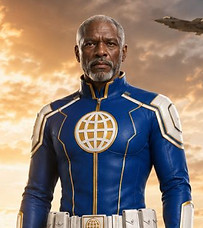
SEAGUARD Commander

ASTROGUARD Commander
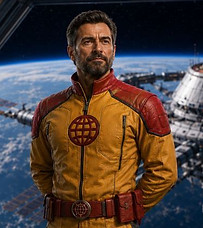
TERRAGUARD Commander

MOONGUARD Commander

PORTALGUARD Commander

MYSTIGUARD Commander
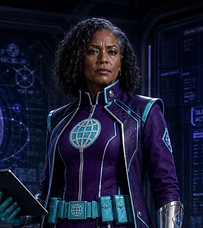
OPERATIONS
GUARD GLOBAL OPERATIONS COMMAND (GOC) HANDBOOK
This Handbook is authorized only for:
GUARD Officers, GOC personnel and GOC-Aligned Academy Personnel
This document provides an orientation of the basic of Global Operations and GUARD response Doctrine. There are sections covering all applicable information and operations for Global Operations Command.
Click the PDF Document image to download and open the Handbook.
GUARD Global Operations Command, commonly known as GOC, is the operational engine of GUARD. It is the command responsible for turning GUARD’s global mission into coordinated action across air, sea, land, space, lunar, dimensional, mystical, crisis-response, tactical, and support environments.
When a threat, disaster, invasion, breach, humanitarian emergency, hostile force, or unusual phenomenon requires GUARD action, Global Operations Command is the division that organizes the response, synchronizes the mission, and ensures the right people, assets, and commands move together.
GOC does not operate as a single battlefield unit. It is a global command network built to coordinate many types of missions at once, across many regions, environments, and threat conditions. Its purpose is simple:
To place the right capability, in the right theater, at the right time, under the right command structure.
Mission of Global Operations Command
The mission of GUARD Global Operations Command is to plan, coordinate, direct, and support GUARD operations worldwide and beyond Earth when required.
GOC provides operational leadership for missions involving:
-
Global defense and threat response
-
Air, maritime, ground, orbital, lunar, portal, and mystical operations
-
Humanitarian and disaster-response coordination
-
Crisis stabilization and emergency intervention
-
Joint operations with national governments, militaries, allied agencies, and approved heroic teams
-
Operational support, logistics coordination, theater planning, and field sustainment
-
Specialized response to unusual, high-risk, or nonconventional threats
Global Operations Command serves as the central coordinating authority for GUARD’s major operational commands while working in close alignment with the GUARD Director, Executive Director, Executive Leadership Council, World Security Council, and other GUARD divisions.
Command Role Within GUARD
Global Operations Command is one of GUARD’s seven major divisions and commands. It sits below the GUARD Director and Executive Leadership structure and functions as GUARD’s primary mission execution command.
GOC is responsible for operational mission commands, while Guardian Corps Command administratively manages the Guardian personnel communities known as Aeroguardians, Seaguardians, Terraguardians, and Astroguardians. This distinction is important:
Guardian Corps Command manages Guardian personnel readiness, identity, career structure, and corps development.
Global Operations Command directs operational missions involving commands such as Aeroguard, Seaguard, Terraguard, Astroguard, Moonguard, Portalguard, and Mystiguard.
This structure allows GUARD to maintain strong corps identity while still placing operational mission authority under a unified global command.
Core Operational Philosophy
Global Operations Command is built around five operating principles:
1. Unified Command Across Every Theater
GOC coordinates across air, sea, land, space, lunar, dimensional, mystical, and crisis-response environments. No single theater exists in isolation. A maritime incident may require Aeroguard lift support, Medical evacuation teams, Intelligence analysis, Terraguard ground containment, and Resources Division sustainment.
GOC exists to make those moving parts work as one.
2. Speed With Structure
GUARD operations must move quickly, but not recklessly. GOC emphasizes fast decision-making supported by clear authority, disciplined communication, and defined mission objectives.
The goal is not simply to respond first.
The goal is to respond correctly before the crisis grows beyond control.
3. Theater-Specific Expertise
Each GUARD operational command is built around the demands of its environment. Aeroguard handles air and aerospace operations. Seaguard manages maritime and undersea response. Terraguard focuses on ground theaters. Astroguard operates in orbital and deep-space environments. Moonguard protects lunar operations. Portalguard manages portal and dimensional breaches. Mystiguard responds to mystical and arcane threats.
GOC’s strength comes from respecting these specialties while integrating them into a single mission framework.
4. Civilian Protection First
GUARD’s operational strength exists to protect people. GOC missions prioritize civilian safety, evacuation, rescue, stabilization, containment, humanitarian relief, and the prevention of unnecessary loss of life.
Even in combat, the mission is never only to defeat a hostile force.
The mission is to protect the world and preserve the future beyond the battle.
5. Operational Readiness Before Crisis
GOC does not wait for disaster before preparing. It maintains readiness through training, joint planning, regional coordination, scenario modeling, field exercises, support planning, and cross-command integration.
A successful GUARD operation begins long before the alarm sounds.
Major Operational Commands
Global Operations Command oversees a broad network of specialized mission commands. Each command is built for a distinct theater or operational challenge.
Aeroguard
Aeroguard is GUARD’s air and aerospace operational command. It manages air-response missions, aerial deployment, airspace defense, air rescue, aircraft support, airborne surveillance, atmospheric threat response, and rapid global movement of personnel and supplies.
Aeroguard supports:
-
Air defense and interception
-
Emergency airlift
-
Atmospheric rescue
-
Aerial reconnaissance
-
Medical and humanitarian transport
-
Air Station operations
-
Air support for ground, maritime, and crisis missions
Aeroguard is often the first visible sign of GUARD response during large-scale emergencies because it provides the speed and reach needed to move assets across the globe.
Seaguard
Seaguard is GUARD’s maritime, coastal, and undersea operational command. It protects sea lanes, responds to ocean-based threats, supports maritime rescue, and coordinates operations involving coastal regions, vessels, underwater facilities, and oceanic disasters.
Seaguard supports:
-
Maritime rescue and evacuation
-
Coastal crisis response
-
Undersea threat monitoring
-
Protection of shipping routes
-
Oceanic environmental response
-
Support to island and coastal populations
-
Maritime security coordination with national and international partners
Seaguard plays a major role in disaster relief, refugee movement, port security, oceanic threat response, and operations involving sea-based infrastructure.
Terraguard
Terraguard is GUARD’s ground operations command. It coordinates land-based missions involving urban, rural, desert, jungle, mountain, arctic, infrastructure, and disaster-zone environments.
Terraguard supports:
-
Ground crisis response
-
Urban and rural disaster operations
-
Hostile ground-force containment
-
Evacuation route security
-
Infrastructure protection
-
Humanitarian corridor support
-
Ground-based search and rescue
-
Coordination with local and national ground forces
Terraguard is often the backbone of long-duration field operations because most crises ultimately affect people, roads, shelters, cities, farms, power systems, and communities.
Astroguard
Astroguard is GUARD’s orbital and space operations command. It manages missions involving Earth orbit, spacecraft support, orbital defense, space-based rescue, extraterrestrial threat monitoring, and space infrastructure protection.
Astroguard supports:
-
Orbital mission response
-
Spacecraft rescue and recovery
-
Satellite and station protection
-
Extraterrestrial threat monitoring
-
Orbital debris and hazard response
-
Coordination with space agencies and allied space forces
-
Support to lunar and deep-space mission planning
Astroguard ensures that GUARD can defend and support operations beyond the atmosphere, where traditional national response systems may not be sufficient.
Moonguard
Moonguard is GUARD’s lunar operations command. It supports security, defense, rescue, logistics, infrastructure, and emergency operations on and around the Moon.
Moonguard supports:
-
Lunar base protection
-
Lunar rescue and evacuation
-
Surface patrol and security
-
Lunar infrastructure defense
-
Transportation and access control
-
Support to scientific, civilian, and GUARD lunar facilities
-
Coordination with Astroguard and Resources Division for lunar sustainment
Moonguard exists because the Moon is no longer a distant frontier. It is a strategic operating environment requiring dedicated protection, planning, and command structure.
Portalguard
Portalguard is GUARD’s portal, dimensional breach, and transit anomaly command. It responds to unstable gateways, unauthorized portals, extradimensional crossings, spatial distortions, and incidents where normal geography no longer behaves predictably.
Portalguard supports:
-
Portal detection and stabilization
-
Dimensional breach containment
-
Evacuation from unstable transit zones
-
Interdimensional incursion response
-
Spatial anomaly mapping
-
Secure portal transit procedures
-
Coordination with Mystiguard and Special Threat Command
Portalguard handles the operational side of impossible movement: where a breach opens, what passes through, how it is contained, and how people are kept alive when space itself becomes unreliable.
Mystiguard
Mystiguard is GUARD’s mystical, arcane, supernatural, ritual, cursed-object, and magic-threat response command. It addresses threats and incidents that cannot be understood through conventional science or military doctrine alone.
Mystiguard supports:
-
Arcane threat analysis
-
Ritual disruption and containment
-
Cursed-object response
-
Supernatural incident stabilization
-
Mystical site security
-
Magical hazard assessment
-
Coordination with Portalguard, PsiGuard, Medical, and Intelligence
Mystiguard exists because some threats are not mechanical, political, biological, alien, or military. Some threats are symbolic, ritual, ancient, supernatural, or bound to rules most commanders cannot see.
Special Threat Command
Special Threat Command, or STC, provides high-level command oversight for unusual operational threats that cross the line between science, magic, dimensional instability, and reality-level hazards. STC includes operational oversight of Portalguard and Mystiguard and serves as the command bridge between technical anomaly response and mystical threat containment.
STC supports:
-
Integrated Portalguard and Mystiguard operations
-
Reality instability incidents
-
Cross-dimensional threat response
-
Arcane-portal hybrid events
-
Special containment decisions
-
Coordination with PsiGuard, Intelligence, Medical, and World Court oversight
STC exists for the crises that do not fit cleanly into ordinary categories. When reality itself becomes part of the operating environment, STC establishes command.
Crisis Response Operations
Crisis Response Operations coordinates GUARD’s response to major emergencies affecting civilian populations, national stability, regional infrastructure, or global security.
This includes:
-
Natural disasters
-
Mass evacuation events
-
Humanitarian emergencies
-
Infrastructure collapses
-
Large-scale rescue operations
-
Refugee movement support
-
Public safety stabilization
-
Multi-region emergency response
-
Crisis Response Operations works closely with Medical, Resources, Public Affairs, Terraguard, Aeroguard, Seaguard, and local authorities to protect civilians and restore order during high-pressure events.
Tactical Response
Tactical Response provides operational coordination for high-risk missions involving hostile forces, complex threat environments, rescue under threat, containment of violent actors, or mission conditions requiring disciplined use of force.
Tactical Response supports:
-
High-risk intervention
-
Hostile-force containment
-
Tactical rescue
-
Site stabilization
-
Multi-command field coordination
-
Guardian and superhero-adjacent operational integration
-
Tactical support to national and military partners
Tactical Response is not a license for reckless combat. It exists to bring structure, control, and mission discipline to dangerous environments.
Joint Mission Planning
Joint Mission Planning coordinates large-scale operations involving multiple GUARD commands, divisions, national partners, allied agencies, military forces, and approved heroic teams.
Joint Mission Planning supports:
-
Mission design
-
Force allocation
-
Risk analysis
-
Command relationships
-
Timeline coordination
-
Contingency planning
-
Inter-command synchronization
-
After-action lessons integration
Many GUARD missions involve more than one command. Joint Mission Planning ensures that those missions do not become a collection of disconnected efforts.
National and Military Coordination
GUARD operates globally, but it does not operate in a vacuum. National and Military Coordination manages operational relationships with national governments, military commands, emergency agencies, international organizations, and approved local authorities.
This function supports:
-
Sovereignty coordination
-
Military liaison activity
-
Cross-border mission approval
-
Airspace, maritime, and ground-access coordination
-
Joint operational planning
-
Deconfliction with national forces
-
Compliance with World Security Council and World Court authorities
This area is essential because even the best mission can fail if command authority, jurisdiction, and local coordination are unclear.
Operational Support Functions
Operational Support Functions, or OSF, ensures that GUARD missions have the resources, systems, personnel, logistics, transportation, communications, medical pathways, and support structures required to succeed.
OSF supports:
-
Mission logistics
-
Supply movement
-
Transportation coordination
-
Field sustainment
-
Repair and maintenance support
-
Communications support
-
Equipment staging
-
Personnel movement
-
Evacuation support
-
Backup planning
-
Resource prioritization
OSF is one of the most important functions inside Global Operations Command. It ensures that GUARD teams do not simply deploy into danger, but deploy with the tools, routes, supplies, information, and fallback plans needed to complete the mission.
Command Leadership
Global Operations Command is led by a senior command structure responsible for global mission coordination, theater alignment, and operational readiness.
Key GOC leadership roles include:
-
Global Operations Command Director
-
North Hemisphere Executive Command Commander
-
South Hemisphere Executive Command Commander
-
Environmental/Theater Command Commander
-
Special Threat Command Commander
-
Operational Support Functions Commander
-
Additional command leaders assigned to Aeroguard, Seaguard, Terraguard, Astroguard, Moonguard, Crisis Response, Tactical Response, and Joint Mission Planning
These commanders operate as part of an integrated command network rather than isolated departments. Their success depends on constant coordination, shared situational awareness, and disciplined operational trust.
Integration With Other GUARD Divisions
Global Operations Command works closely with every major GUARD division.
Executive Division
Provides strategic direction, public authority, executive decision-making, World Security Council alignment, public affairs coordination, and overall leadership guidance.
Guardian Corps Command
Provides the administrative structure, readiness management, training identity, and corps development for Aeroguardians, Seaguardians, Terraguardians, and Astroguardians.
Intelligence & Threat Analysis Division
Provides intelligence, threat forecasting, operational analysis, adversary tracking, anomaly assessment, and mission risk evaluation.
Special Security & Internal Integrity Command
Provides internal security, integrity monitoring, counter-infiltration, XGUARD support, PsiGuard screening, and protection against internal compromise.
Medical, Humanitarian & Bio-Sciences Division
Provides medical operations, casualty response, humanitarian care, field hospitals, bio-threat response, MCARE coordination, and personnel health support.
Resources, Logistics & Infrastructure Division
Provides large-scale resource management, infrastructure support, logistics systems, facilities, construction, procurement, and long-term sustainment capability.
GOC succeeds because it does not operate alone. It connects GUARD’s capabilities into mission-ready action.
Operational Readiness
Global Operations Command maintains readiness through continuous planning, simulation, training, regional coordination, and command exercises.
Readiness includes:
-
Command-center operations
-
Theater-specific training
-
Joint exercises
-
Emergency deployment drills
-
Crisis simulations
-
Portal and mystical incident training
-
Lunar and orbital readiness scenarios
-
Humanitarian response exercises
-
Multi-command communication drills
-
After-action review and improvement cycles
GOC’s goal is to make complex response feel practiced before the real crisis arrives.
Working With Heroes and Specialized Teams
GUARD frequently operates in a world where superheroes, metahumans, alien allies, mystical figures, and independent heroic teams may be present during crises. Global Operations Command provides the structure needed to integrate these powerful assets without losing mission discipline.
GOC may coordinate with approved heroic teams when:
-
Their capabilities are essential to the mission
-
Civilian safety requires rapid intervention
-
Threat conditions exceed normal response capability
-
Their involvement is authorized, monitored, and mission-aligned
-
GUARD command can maintain operational coordination
The goal is not to control every hero.
The goal is to prevent chaos when extraordinary people enter extraordinary events.
Public Trust and Operational Accountability
GOC’s actions often occur under intense public attention. Large-scale operations may involve civilian casualties, national borders, political tension, media scrutiny, and public fear.
For this reason, GOC works closely with GUARD Public Affairs, Executive Division, World Security Council representatives, and applicable oversight bodies to ensure that operations remain accountable, lawful, and explainable where security allows.
GUARD does not treat public trust as an afterthought.
Public trust is part of operational success.
The GOC Standard
Global Operations Command is defined by action, coordination, and responsibility.
Its personnel must be able to operate in uncertainty, respect command structure, think across disciplines, and remember that every mission affects real people. GOC personnel may work behind screens, in hangars, aboard ships, in disaster zones, in orbit, on the Moon, beside portals, or inside mystical containment zones.
Different environments.
Different uniforms.
Different risks.
One command standard.
When the world needs GUARD to move, Global Operations Command moves first, moves together, and moves with purpose.
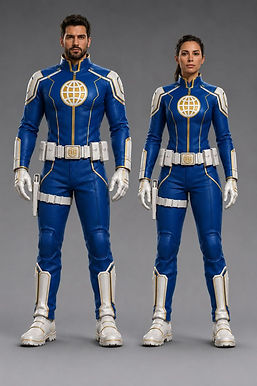
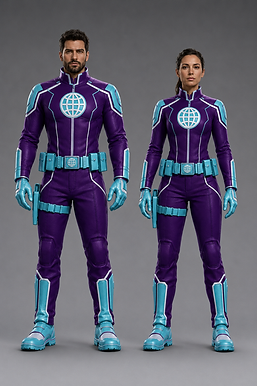
UNIFORMS