
A Universe of Pure Imagination

TM


ALLIED FIGHTERS ALBUMS & PLAYLISTS


MODERN DAY (CURRENT) SQUADS
The squads listed below are current groups in the Allied Fighters that Major Invader has formed or is trying to put together. As of this writing, NONE of these squads exist, other than in the Major's best laid plans and plots for combating his arch-nemesis, Baron Berlin and Axis Force.
Major Invader wants to create additional squads but at this time, it seems they don't exist...or do they?


PREVIOUS GENERATIONS
The Allied Fighters have been around for decades! Starting in World War II (WWII), the Allied Fighters formed. Since then, they only reformed under Major Invader's leadership twice: in the 1970s and in 2000 (Soltan Invasion).
Click on any of the logos below to see that era's page of characters and history for the Allied Fighters!


HISTORY
The Allied Fighters were born out of necessity. On December 10, 1941, only days after the United States entered World War II, the governments already fighting against the Axis powers were forced to acknowledge a reality far more dangerous than what appeared in newspapers or military briefings. The war was no longer being fought solely with soldiers, tanks, aircraft and ships. Secret weapons, experimental technologies, ancient relics, mystics, superhuman combatants and individuals possessing extraordinary abilities had begun appearing on both sides of the conflict. The Axis powers were already gathering such people into their own specialized forces. The Allies needed an answer, and from that need came a new kind of fighting unit: the Allied Fighters.
They were never a conventional military organization. Their members came from different nations, cultures, backgrounds and services. Some were soldiers and pilots. Others were scientists, adventurers, mystics, resistance fighters or individuals whose abilities could not easily be explained. Many had little in common beyond the war itself. What held them together was the understanding that the enemy they faced could not always be stopped by conventional armies. At the center of that unlikely alliance stood Captain Invader, a hard-driving American officer whose greatest ability was not superhuman strength or some fantastic weapon, but leadership. He learned quickly that commanding extraordinary people required something very different from commanding ordinary troops. They had to learn to trust one another, to follow a plan, and most importantly, to understand that no individual member—regardless of power, reputation or nationality—was greater than the mission.
From 1941 through 1945, the Allied Fighters fought a largely hidden war within World War II. They attacked secret installations, defended strategic targets, supported resistance movements, recovered dangerous technology and artifacts, and battled enemies whose very existence was often concealed from the public. Their most persistent adversary was Axis Force, a collection of enemy superhumans, soldiers, assassins and specialists assembled for much the same purpose as the Allied Fighters themselves. At the center of Axis Force was Baron Berlin, a calculating and ruthless commander who would become Captain Invader’s greatest enemy. Their struggle grew far beyond simple battlefield rivalry. Each man came to understand the other’s methods, strengths and weaknesses, and what began during the Second World War would continue to shape both of their lives for decades.
Victory came at a terrible cost. The Allied Fighters suffered casualties throughout the war, and Captain Invader personally watched friends, allies and family members disappear into a conflict that seemed to demand more from them every year. His own brother, Kinetic Avenger, was killed during the war, and many other Allied Fighters never returned from their missions. By the end of the conflict, nearly half of the heroes who had at one time served beneath the Allied Fighters banner were dead. Those losses stayed with Captain Invader long after the shooting stopped. They also changed the way he viewed command. To the public, the Allied Fighters became wartime heroes. To the man who had led them, every victory carried a list of names that would never appear beside him again.
Near the end of the war, Captain Invader’s path crossed with the mysterious time traveler known as Chrononaut, who warned him that the conflict with Baron Berlin was not truly over. What followed became part of one of the strangest and most secretive chapters in Allied Fighters history. Captain Invader was drawn into events surrounding Hitler’s inner circle and Baron Berlin’s eventual disappearance into cryogenic preservation as the Third Reich collapsed. The warning left behind by Chrononaut eventually became the foundation for secret contingency plans and the so-called Alpha Foxtrot protocols, created for the possibility that Baron Berlin and Axis Force might someday return. When World War II officially ended in September 1945, the original Allied Fighters were disbanded. Their members returned home, disappeared into other organizations, or attempted to build lives after years of war. Captain Invader survived, but the man who eventually became known as Major Invader would never truly leave those years behind.
For decades, the Allied Fighters remained dormant, remembered mostly in classified files, old photographs and the memories of those who had survived. Then, during the 1970s, Major Invader brought the name back. A new generation of Allied Fighters assembled, fought, and eventually met an ending that remains one of the most guarded chapters in the team’s history. There are mission records. There are photographs. There are surviving accounts. Major Invader can still remember their personalities, their arguments, their victories and their failures. But ask him how that incarnation of the Allied Fighters truly ended and the old soldier stops talking.
Sometimes he becomes angry.
Sometimes he changes the subject.
Sometimes he simply leaves.
Whatever happened to that generation was severe enough that, even decades later, Major Invader is not ready to tell the entire story. The files remain closed, but the memories never went away.
The world continued to change around him. New heroes appeared, new threats emerged, and technology advanced beyond anything the original Allied Fighters could have imagined. By the 1990s, Major Invader was still watching for people who might someday be needed. One of them was a young medical student named Andrew Alistair, later known as Doc Alleviation. Major Invader recognized both his potential and his unusual healing abilities and encouraged him to complete his medical training before ever considering life as a superhero. He believed there would be time to prepare him properly. There was not.
In 2000, the Soltan Star Empire invaded Earth. There was no leisurely recruitment period, no carefully structured training program and no opportunity to build another team gradually. Cities became battlefields almost overnight. Major Invader once again called upon heroes to stand together, assembling another Allied Fighters team in the middle of an extraterrestrial war. Doc Alleviation answered the call, as did others who had never expected to be thrown into a conflict of that scale. They fought because there was no one else available to fight in their place. Boston became one of the most violent fronts of the invasion, and the Allied Fighters suffered catastrophic losses. Ms. Vindicator I was killed. Director 8 was killed. Others died with them. By the time the invasion was over, Major Invader and Doc Alleviation were among the only survivors of that hastily assembled generation.
What happened during those final battles left scars even deeper than the ones Major Invader had carried from World War II. As with the Allied Fighters of the 1970s, the facts of the 2000 conflict are known, but the complete story is not. There are events Major Invader still refuses to discuss—choices made in combat, losses he blames himself for, moments that never made it into official reports. Even he is not ready to tell that story. When the Soltan invasion finally ended, he made a decision that seemed permanent. The Allied Fighters were finished.
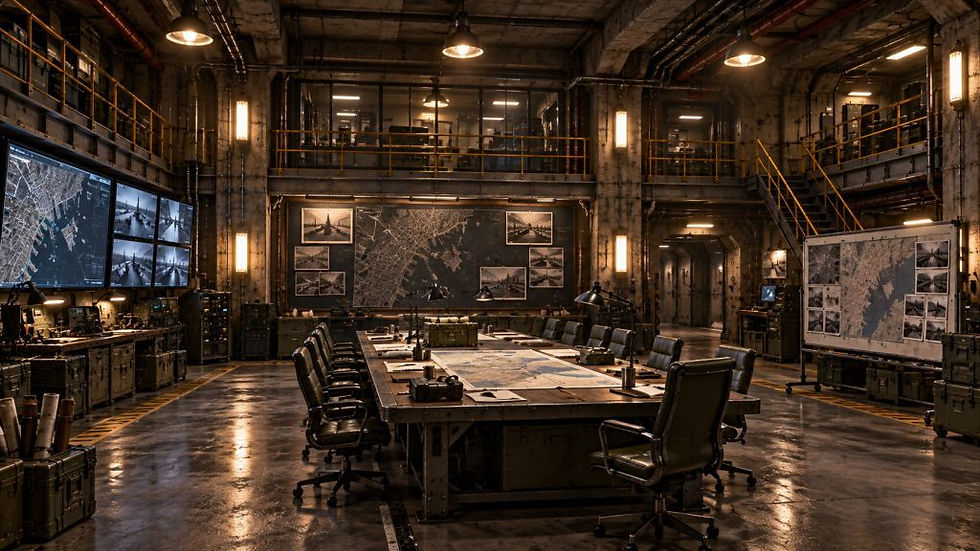
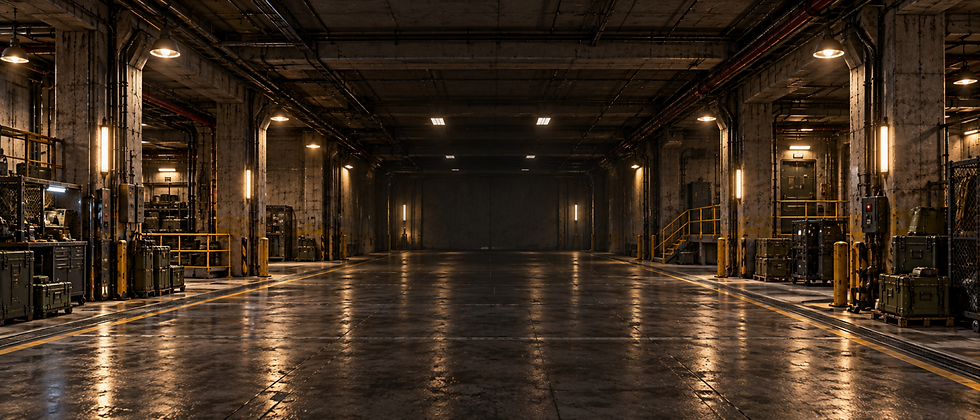
Fort Patrick Henry was shut down. Aircraft stopped flying. Vehicles disappeared beneath tarps. Workshops went silent. Support personnel were released. MARCIE was ordered to stand down. Pumps failed, metal rusted, computers became obsolete, and the underground headquarters slowly deteriorated beneath Boston. Major Invader had spent most of his life watching people die under the Allied Fighters banner, and after 2000 he no longer believed he had the right to ask another generation to do the same. For more than twenty-five years, he kept the organization closed.
Then the past returned.
Baron Berlin was alive.
Axis Force was moving again.
The warning given by Chrononaut during World War II had finally become reality, and the old Alpha Foxtrot contingencies began to matter once more. Major Invader was confronted with the one possibility he had spent decades preparing for and the one possibility he had desperately hoped would never occur. If Baron Berlin had returned, then the war he believed had ended in 1945 had never really ended at all.
Fort Patrick Henry began to wake from its long silence. Power returned to corridors that had been dark for decades. Old machinery was repaired. Forgotten rooms were reopened. Support personnel returned, joined by an entirely new generation of engineers, pilots, scientists, operators and specialists. MARCIE was reactivated after more than two decades of dormancy and greeted Major Invader with the wonderfully understated observation that he had “taken longer than expected.” The headquarters was still battered, outdated and partially deteriorated, but it was alive again.
Rebuilding the base proved easier than rebuilding the team. Major Invader had learned too much from 2000 to simply gather powerful people in one room and call them Allied Fighters. The modern organization would be built around smaller squads, defined command structures, specialized roles, stronger support systems and far more deliberate training. Samuel Vincent, the soldier who had distinguished himself during the Soltan occupation of Boston and later became known as Valor, emerged as one of the most important figures in that effort. As Deputy Commander and trainer, Valor helped turn new recruits into disciplined units rather than isolated heroes. Doc Alleviation eventually returned as well, despite everything he had endured during the invasion.
One by one, others followed. Some were veterans. Some inherited names and responsibilities from earlier generations. Some were entirely new. They did not resemble the Allied Fighters of 1941, nor should they have. The world had changed too much, and the organization had survived too much, to simply recreate the past.
Yet the principle that created the team remained unchanged.
When threats appear that ordinary forces cannot contain, when people from different backgrounds must put aside their differences because the alternative is catastrophe, someone still has to stand together.
That was true when the first Allied Fighters assembled in December 1941. It was true in the 1970s. It was true when the Soltans came in 2000. And it is true again today.
The Allied Fighters have won wars, buried friends, disappeared from history and risen again. Twice, Major Invader watched entire generations carrying that name come to endings so traumatic that even now he cannot bring himself to tell their full stories. He knows better than anyone what the banner can cost the people who stand beneath it.
And yet the doors of Fort Patrick Henry are open again.
The hangars have lights. The operations rooms have voices. The workshops are running. New heroes are training where old ones once prepared for war. Beneath Boston, an organization that has survived more than eight decades of battles, tragedy and silence is once again preparing for whatever comes next.
The Allied Fighters were never immortal.
Too many graves prove otherwise.
The idea was.
ALLIED FIGHTERS HQ
LOCATION:
Boston, Massachusetts, USA (Secret Location)

