
A Universe of Pure Imagination

TM


CRIMWAVE MEMBERS/LEADERS
CRIME BOSS
LIEUTENANTS


HISTORY
Crimewave did not begin as a single gang, cartel, or supervillain team. It grew out of the collapse, corruption, violence, and hidden power struggles surrounding the city publicly known as Telexaca and, within criminal circles, feared as Talaxaca.
To civilians, Telexaca was a troubled but living city: a place of families, businesses, schools, politics, nightlife, and local traditions. To the underworld, Talaxaca was something darker. It was the name used for the city’s hidden criminal order — the network of cartels, gangs, corrupt officials, smugglers, hired killers, mystics, and power brokers who treated the city as territory to be divided, bought, and ruled.
Crimewave emerged from that second world.
Its eventual founder, the man now known as Crimemaster, was shaped by Telexaca’s violence from childhood. Born around 1975, he grew up during an era when rival criminal factions fought openly and quietly for influence. He watched how fear moved faster than law, how money protected monsters, and how a single name could carry more power than an army of ordinary criminals.
One of the most feared names of that era was Ruis Lanzana, associated with the violent criminal organization known as Death’s Hand. Records from this period remain intentionally unclear. Some accounts describe Lanzana as the true leader of Death’s Hand. Others suggest the name was an alias, a planted identity, or a criminal title used by more than one person. Regardless of the truth, the Lanzana name became a symbol of terror in Talaxaca’s underworld.
By the late 1980s and early 1990s, Telexaca was a city under pressure. Criminal organizations competed for control. Civic institutions weakened under corruption and intimidation. Local defenders tried to hold the line, but the deeper criminal structure kept reproducing itself. Every victory against one gang created room for another.
The event later remembered as the Night of Purple Death became one of the turning points in this hidden history. Around 1990, when the future Crimemaster was roughly fifteen years old, the underworld experienced a violent rupture that changed the balance of power in Telexaca. The exact facts remain disputed, but the aftermath was clear: old alliances broke, Death’s Hand’s influence was shaken, and the future Crimemaster learned one of the central lessons that would define Crimewave.
Violence could win territory.
But legend could hold it.
The color purple, the uncertainty around identities, the use of fear as theater, and the manipulation of criminal mythology all began to take shape in this period. Crimemaster did not simply learn how criminals fought. He learned how they remembered, how they obeyed, and how they passed stories down as warnings.
During this same era, the costumed figure known as El Scorpio became part of Telexaca’s violent public mythology. Esteban, the original El Scorpio, fought against Death’s Hand and other criminal powers operating in the city. One of his most consequential actions was killing the man publicly operating as Ruis Lanzana at a medical compound. Publicly, this was treated as a major blow against Death’s Hand. Privately, later records never fully confirmed whether the dead man was the original Lanzana, a substitute, or one more layer in a larger deception.
That uncertainty mattered.
It proved that in Talaxaca, identity could be a weapon. A dead man could remain useful. A false name could outlive the body that used it. An organization could survive if its symbols were stronger than its leaders.
Crimemaster would eventually build an empire around that principle.
The next major transformation came during the Soltan Invasion of 2000. The invasion shattered governments, cities, families, and criminal networks around the world. In Telexaca, it created chaos on a scale no ordinary gang war could match. The man who would become Crimemaster was about twenty-five at the time. He was not yet the polished figure later associated with Crimewave’s purple-black command structure. He was a dangerous young survivor fighting through the ruins of his city with stolen weapons, handguns, improvised tactics, and ruthless determination.
In the confusion of the invasion, he became something more complicated than a criminal. For a brief period, he was seen by some as a defender of Telexaca — not because he served the law, but because he fought for the survival of the city, its streets, and the people and territory he considered his own.
This became one of the contradictions at the heart of Crimewave’s origin.
Crimemaster did not emerge from the Soltan Invasion believing in heroism. He emerged believing that official systems fail when they are needed most. He saw governments overwhelmed, law enforcement scattered, heroes pulled toward larger battles, and civilians forced to rely on whoever could provide immediate protection, food, weapons, transport, shelter, or revenge.
He studied the disaster like a blueprint.
He saw that whoever controlled supplies controlled survival. Whoever controlled routes controlled escape. Whoever controlled fear controlled obedience. Whoever controlled the story afterward controlled legitimacy.
The Soltan Invasion did not create Crimemaster’s ambition, but it gave that ambition a structure.
In the years following the invasion, he began consolidating what would become Crimewave. Unlike traditional gangs, Crimewave was not built only on territory or brute force. It was built in layers.
Street criminals provided visibility and manpower. Smugglers and transport crews provided movement. Accountants and shell companies provided financial cover. Lawyers and compromised professionals provided legitimacy. Technicians provided access to surveillance, security, and digital systems. Mystic assets provided intimidation and protection that ordinary law enforcement could not easily explain. Enforcers provided fear. Public businesses provided camouflage.
Crimewave grew because it made itself useful.
At first, it connected criminals who needed resources. Then it protected criminals who could pay. Then it supplied criminals who lacked technical skill. Then it absorbed rivals who could not compete. Over time, it became less a gang and more a criminal operating system.
Crimemaster understood that the strongest empire was not the one that personally committed every crime. It was the one that made other criminals dependent on its infrastructure.
The organization’s purple identity became a deliberate psychological brand. Purple suggested wealth, poison, shadow, luxury, mystery, and controlled violence. Crimewave’s colors were not chosen simply to look distinctive. They made the organization recognizable across nightclubs, contracts, digital signatures, weapons, uniforms, vehicles, and rumors.
A Crimewave symbol meant opportunity to some, protection to others, and a warning to everyone else.
As Crimewave expanded, the criminal meaning of Talaxaca changed as well. It no longer referred only to Telexaca’s hidden underworld. Increasingly, Talaxaca became associated with Crimemaster’s system of power: the pact structure, the criminal code, the hierarchy of favors and punishments, and the sense that the city’s underworld now had a central gravity.
That central gravity eventually took physical form in the Talaxaca Compound.
The compound became Crimewave’s symbolic and operational heart. Unlike a crude fortress, it was designed to project elegance, wealth, and permanence. Its Spanish-style hacienda appearance communicated power without desperation. It was beautiful enough to host negotiations, private meetings, celebrations, and political conversations, while secure enough to function as a command center, safe haven, and fortified estate.
The Talaxaca Compound told visitors exactly what Crimewave wanted them to understand:
This was not a gang hiding in the alleys.
This was an empire confident enough to build walls, gardens, offices, guest quarters, security posts, hidden rooms, and command spaces — then invite people inside.
From the compound, Crimewave formalized its contract system. Deals were no longer just street agreements or cartel promises. They became structured arrangements involving protection, debt, service, silence, leverage, and consequence. Some people joined Crimewave for money. Others joined because they had no better option. Some were saved, compromised, threatened, or purchased. Others were allowed to believe they were making a choice.
Crimemaster’s genius was understanding that loyalty does not always require love.
Sometimes loyalty comes from fear.
Sometimes from gratitude.
Sometimes from shame.
Sometimes from family.
Sometimes from debt.
Sometimes from believing betrayal would cost more than obedience.
Crimewave used all of it.
The organization’s next major public development was The Wave, a massive purple-themed entertainment complex that became Crimewave’s most successful public-facing asset. To the outside world, The Wave was a luxury destination: nightclub, casino, restaurants, bars, convention space, food court, performance venue, and multi-level social hub. Its wave motif and purple lighting made it instantly recognizable.
To Crimewave, it was far more valuable than a club.
The Wave served as a laundering engine, recruitment site, neutral meeting ground, intelligence collection hub, social trap, and hidden command facility. Beneath and behind the public entertainment spaces, Crimewave maintained secure areas for private meetings, criminal coordination, money movement, surveillance, and operational planning.
The Wave was one of Crimemaster’s clearest strategic victories. It allowed Crimewave to hide criminal infrastructure inside nightlife, luxury, and spectacle. People came willingly. Rivals exposed themselves. Officials accepted invitations. Criminals sought access. Information moved through music, money, alcohol, gambling, security cameras, and private rooms.
Crimewave learned to make vice profitable, fashionable, and useful.
As the organization grew, it expanded beyond traditional criminal services. Crimewave began investing heavily in specialized capabilities: magic, cybercrime, logistics, legal manipulation, psychological influence, heavy enforcement, surveillance, and criminal technology. These capabilities were not gathered randomly. Each one addressed a weakness that had historically limited gangs and cartels.
Magic protected spaces that technology could not.
Cybercrime penetrated systems that guns could not.
Legal influence neutralized consequences that violence could not.
Logistics made expansion sustainable.
Enforcers made betrayal expensive.
Technology turned Crimewave into a supplier, not merely a participant.
This evolution made Crimewave harder to classify and harder to destroy.
Law enforcement agencies could not treat it as only a cartel. Superheroes could not treat it as only a villain team. Rival gangs could not treat it as only a protection racket. Corporate investigators could not treat it as only a laundering network. Every attempt to define Crimewave too narrowly missed part of the machine.
One of the clearest examples of Crimewave’s business expansion was the development of the Stealbot program.
The Stealbot line gave Crimewave a way to sell or rent criminal capability to other groups. The lower-tier models, such as the STEALBOT-1000 and STEALBOT-2000, were designed to be more affordable and useful for smaller gangs, criminal families, and thieves who needed assistance with burglary, surveillance, distraction, electronic interference, remote access, or object retrieval. The more advanced STEALBOT-3000 represented a higher-end model reserved for more serious operations and better-funded clients.
This program revealed a major change in Crimewave’s strategy.
Crimewave was no longer only committing crimes.
It was equipping the criminal marketplace.
By supplying tools, technology, expertise, and services to outside criminals, Crimewave could profit from crimes it did not personally carry out. It could extend influence without exposing its leadership. It could turn independent gangs into customers. It could make criminal groups dependent on Crimewave maintenance, upgrades, rentals, and replacement parts.
That made the Stealbot program a business model, a recruitment funnel, and a quiet form of domination.
As Crimewave’s influence spread, older Telexaca legacies continued to feed into its modern structure. The legacy of El Scorpio remained especially important. Miguel, born on November 1, 1995, inherited the burden of that legacy after years shaped by violence, family loss, and the aftermath of the Soltan Invasion. His connection to the old red-and-black Scorpio tradition and his later movement into a black-and-purple identity reflected the larger transformation of Telexaca itself.
The city’s older conflicts were not erased.
They were absorbed.
Crimewave became powerful because it did not simply conquer the past. It repackaged it. Old vendettas became leverage. Old symbols became brands. Old heroes became complications. Old enemies became myths. Old tragedies became recruitment tools.
By the modern era, Crimewave had become one of the most sophisticated criminal organizations. Its influence runs through Telexaca, Talaxaca, The Wave, the Talaxaca Compound, underground markets, digital networks, criminal contracts, corrupt professional circles, and the broader super-criminal economy.
It operates through a combination of visible power and hidden dependency.
The public may see the nightclub, the money, the purple lights, the rumors, the guards, or the occasional costumed criminal. Rivals may see the contracts, the weapons, the tech, the mystics, or the punishment squads. Investigators may see shell companies, missing records, false identities, encrypted transfers, or witnesses who suddenly change their stories.
But the full structure is larger than any single layer.
Crimewave is a criminal ecosystem.
-
It sells protection.
-
It sells access.
-
It sells fear.
-
It sells silence.
-
It sells technology.
-
It sells influence.
-
It sells the illusion that crime can be organized enough to feel safe.
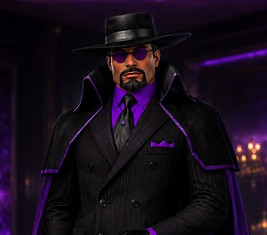
Crimemaster remains at the center of that system, though even his identity is clouded by conflicting names and records. The names Lorenzo Ramirez, Ramone Mendoza, Carlos Sanchez, and Crimemaster continue to appear in different accounts, investigations, rumors, and sealed files. Whether these names refer to separate people, assumed identities, false records, or pieces of a deeper deception remains unknown.
That uncertainty is not a flaw in Crimewave’s history.
It is part of its defense.
The same is true of Ruis Lanzana, Death’s Hand, and the unresolved questions surrounding the Night of Purple Death. Crimewave’s origin is full of disputed identities because Crimewave itself was built by someone who understood the value of confusion.
A clear truth can be attacked.
A useful myth can survive anything.
That is the story of Crimewave: a criminal empire born from the violence of Telexaca, hardened by the Soltan Invasion, organized through Talaxaca’s underworld traditions, legitimized through wealth and public spectacle, expanded through technology and specialized power, and protected by a master strategist who knows that the strongest criminal organization is not the one everyone fears.
It is the one everyone eventually needs.
Crimewave stands as a warning that organized crime does not always look like desperation, decay, or chaos.
Sometimes it looks like luxury.
Sometimes it sounds like music.
Sometimes it signs contracts.
Sometimes it wears a beautiful face, opens a nightclub, funds a business, offers protection, solves a problem, and quietly becomes the system everyone else is trapped inside.
GANG MEMBERS/THUGS


Crimewave Thugs are vetted and tested before any of them join a crew. Initiation involves 1) Stealing something successfully greater than $50,0000; 2) Frame someone else to take the fall; 3) kill someone in your family, gang or a top authority figure to gain a rep (and a wanted poster).
Most of these thugs are well versed in street fighting, theft, stealth, access control systems, knives, handguns and the criminal underground.
A majority get paid well for doing their jobs (20% of the take), however, anyone ever caught 'skimming' or 'stealing' from Crimewave...well, let's just say entire family lines were obliterated as a result.
The thugs (nearly 800 worldwide) are notorious for not getting caught, especially if being chased by a superhero. In this regard, the thugs only use their 'street' names in the field.
STEALBOTS
The STEALBOT Series is Crimewave’s rentable robotic crime-support line, designed to give ordinary criminals access to extraordinary tools. From the compact STEALBOT 1000 theft drone to the mid-sized STEALBOT 2000 raid hauler and the massive STEALBOT 3000 heavy enforcer, each model gives criminal crews a dangerous mix of cargo handling, electronic interference, intimidation, and battlefield support.
For Crimewave, the STEALBOT line is more than equipment. It is a business model: lease the machines, charge for upgrades, sell replacement parts, and let desperate criminals believe technology can make them untouchable.

INFORMATION
-
Role
-
Small theft drone
-
scout
-
jammer
-
grab-and-go support unit
-
-
Crime Tier
-
Street Gang
-
Small Crew
-
Low-Cost Syndicate Asset
-
-
Availability
-
Common within Crimewave-controlled black markets
-
-
Recommended Use
-
Quick theft
-
surveillance
-
distraction
-
small-item extraction
-
police-band disruption
-
STATS
-
Fighting
-
Poor
-
-
Agility
-
Good
-
-
Strength
-
Typical
-
-
Endurance
-
Good
-
-
Reason
-
Poor / Typical programmed logic
-
-
Intuition
-
Typical sensor suite
-
-
Psyche
-
Feeble machine will
-
-
Body Armor
-
Good
-
-
Flight / Hover Speed
-
Typical to Good
-
-
ECM / Jamming
-
Good
-
-
Sensors
-
Good
-
-
Cargo Handling
-
Typical
-
-
Threat Level
-
Low to Moderate
-
STEALBOT 1000
“The Scrambler Drone”
General Description
The STEALBOT 1000 is the smallest and cheapest member of the STEALBOT line. It is designed for criminal groups that cannot afford heavier equipment but still want automated theft support, electronic interference, and limited tactical assistance.
It is not meant to win a fight against superheroes. It is meant to get in, blind cameras, jam local communications, grab valuables, and escape before police or heroes fully respond.
Physical Profile
-
Height / Size
-
Roughly large backpack to small appliance size
-
-
Weight
-
75–125 lbs.
-
-
Mobility
-
Hover-drone / short-burst thruster movement
-
-
Payload Capacity
-
50–100 lbs.
-
-
Armor
-
Good composite plating
-
-
Power Source
-
Rechargeable high-density battery pack
-
-
Operational Duration
-
30–60 minutes active use
-
-
Control Mode
-
Remote control, semi-autonomous, limited AI
-
-
Cost Level
-
Low to Moderate
-
Core Capabilities
-
ECM / Signal Scrambler
-
Can interfere with local cameras, basic alarms, short-range police bands, and unsecured comms.
-
-
Surveillance Package
-
Includes remote camera, low-light camera, audio pickup, thermal spotter, and data relay.
-
-
Mechanical Claw Arms
-
Two claw appendages can grab, carry, drag, or hold objects.
-
-
Small Cargo Void
-
Internal storage compartment for jewelry, cash, drives, keys, documents, phones, or compact stolen goods.
-
-
Limited AI Assist
-
Can follow basic commands such as “retrieve,” “follow,” “hide,” “return,” or “jam signal.”
-
-
Distraction System
-
Can emit flashing lights, smoke bursts, harsh noise pulses, or false movement pings.
-
-
Light Defensive Weaponry
-
Usually fitted with non-heavy deterrent systems, stun prongs, flash emitters, or small projectile modules depending on buyer package.
-
Weaknesses
-
Fragile Under Fire
-
Light armor only. Police weapons, hero attacks, or strong impacts can disable it.
-
-
Limited Battery Life
-
Cannot sustain extended chases or prolonged combat.
-
-
Poor Heavy-Lift Utility
-
Useful for valuables, not vehicles, safes, or major cargo.
-
-
Vulnerable to Skilled Hackers
-
Its low-cost operating system is the easiest STEALBOT model to compromise.
-
-
Weather Sensitive
-
Heavy rain, snow, magnetic interference, or EMP effects can degrade performance.
-

STEALBOT 2000
“The Mid-Tier Menace”
General Description
The STEALBOT 2000 is the practical middle child of the STEALBOT series. It is larger, tougher, and more useful in active criminal operations than the 1000, but much cheaper and easier to deploy than the 3000.
This is the unit Crimewave sells or leases to organizations that need a real battlefield or robbery support machine without the logistical nightmare of operating a walking tank.
The 2000 is commonly used in warehouse raids, armored-car robberies, gang wars, black-market transfers, casino thefts, and quick smash-and-haul operations.
Physical Profile
-
Height / Size
-
Approximately 5–7 ft. tall depending on chassis
-
-
Weight
-
1,000–2,000 lbs.
-
-
Mobility
-
Tri-legged walker, hybrid leg-track system, or heavy tracked chassis
-
-
Payload Capacity
-
500–1,000 lbs
-
-
Armor
-
Excellent composite armor
-
-
Power Source
-
Hybrid electric fuel-cell system
-
-
Operational Duration
-
2–4 hours active use
-
-
Control Mode
-
Remote, autonomous escort, tactical AI support
-
-
Cost Level
-
Moderate to High
-
Core Capabilities
-
Advanced ECM Suite
-
Stronger jamming package than the 1000. Can interfere with police radios, unsecured drones, low-end tracking systems, cameras, and local emergency comms.
-
-
Heavy Cargo Module-
Can carry stolen goods, crates, weapons, stolen tech, cash boxes, or wounded criminals during extraction.
-
-
Manipulator Claws-
Heavy mechanical claw arms can pry doors, carry cargo, pull barriers, or restrain targets.
-
-
Armored Breaching Frame-
Can smash through doors, roll through barriers, or act as moving cover.
-
-
Surveillance Mast-
Often includes rotating camera pod, signal receiver, thermal lens, and tactical light system.
-
-
Gang Battle Support-
Can act as a mobile barricade, intimidation platform, or automated suppression unit in comic-book action scenes.
-
-
Modular Mobility
-
Some models use tri-legged stability; others use tank treads for urban hauling and rough terrain.
-
Optional Crimewave Packages
-
Hauler Package (RES: Good)
-
Enlarged cargo pod and stronger lifting servos.
-
-
Raid Package (RES: Good)
-
Reinforced front armor, breaching ram, flash-smoke launchers.
-
-
Signal Blackout Package (RES: Excellent)
-
Enhanced ECM emitters and camera disruption system.
-
-
Gang War Package (RES: Excellent)
-
Heavier armor, intimidation speakers, crowd-control systems.
-
-
Getaway Package (RES: Good)
-
Higher top speed, tow hitch, auto-route escape programming.
-
Weaknesses
-
Not Subtle
-
Too large and loud for quiet infiltration.
-
-
Moderate Speed Only
-
Faster than the 3000 in some configurations, but not a true pursuit vehicle.
-
-
Leg/Track Vulnerability
-
Mobility systems are exposed compared to the 3000’s massive armored limbs.
-
-
Requires Maintenance
-
Cheaper gangs often fail to maintain them, causing breakdowns mid-crime.
-
-
Can Be Outmaneuvered
-
Agile heroes, flyers, or speedsters can exploit its slower rotation and bulk.
-
INFORMATION
-
Role
-
Mid-sized hauler
-
jammer
-
raid-support robot
-
gang battle support unit
-
-
Crime Tier
-
Organized Gang
-
Professional Robbery Crew
-
Crimewave Affiliate
-
-
Availability
-
Controlled rental
-
lease
-
syndicate purchase
-
-
Recommended Use
-
Robbery support
-
getaway cargo hauling
-
street battles
-
strong-arm raids
-
armored extraction
-
STATS
-
Fighting
-
Typical
-
-
Agility
-
Typical
-
-
Strength
-
Excellent
-
-
Endurance
-
Excellent
-
-
Reason
-
Typical programmed tactics
-
-
Intuition
-
Good sensor suite
-
-
Psyche
-
Feeble machine will
-
-
Body Armor
-
Excellent
-
-
Ground Speed
-
Typical to Good
-
-
ECM / Jamming
-
Excellent
-
-
Sensors
-
Good
-
-
Cargo Handling
-
Excellent
-
-
Threat Level
-
Moderate to High
-

INFORMATION
-
Role:
-
Heavy criminal enforcer
-
walking hauler
-
battlefield support robot
-
intimidation platform
-
-
Crime Tier
-
Major Syndicate
-
Crimewave Elite
-
High-Risk Operations
-
-
Availability
-
Restricted Crimewave use
-
Elite rental
-
Syndicate-level lease
-
-
Recommended Use
-
High-risk raids
-
major heists
-
superhero distraction
-
heavy cargo extraction
-
compound defense
-
STATS
-
Fighting
-
Good
-
-
Agility
-
Poor
-
-
Strength
-
Remarkable
Endurance
-
Remarkable
Reason
-
Typical tactical AI
Intuition
-
Excellent sensor suite
Psyche
-
Feeble machine will
-
-
Body Armor
-
Remarkable
-
-
Ground Speed
-
Typical
-
-
ECM / Jamming
-
Remarkable
-
-
Sensors
-
Excellent
-
-
Cargo Handling
-
Remarkable
-
-
Threat Level
-
High to Very High
-
STEALBOT 3000
“The Heavy-Hitter”
General Description
The STEALBOT 3000 is the flagship model of the STEALBOT series. It is not subtle, cheap, or easy to hide. It is a walking crime machine designed for intimidation, brute force, heavy hauling, and survival under fire.
Crimewave deploys the 3000 when the operation is important enough to justify the cost and loud enough that stealth is already gone. It can carry massive stolen cargo, smash through barriers, absorb punishment, and keep police or heroes occupied while the real objective is moved elsewhere.
It is not just a robot. It is Crimewave’s statement piece.
Physical Profile
-
Height / Size
-
Approximately 12 ft. tall
Weight
-
8,000–11,000 lbs
Mobility
-
Heavy bipedal armored walker
Payload Capacity
-
2,000–3,000 lbs.
Armor
-
Remarkable reinforced composite armor
Power Source
-
Diesel-electric / supercapacitor hybrid system
Operational Duration
-
4–8 hours active use
Control Mode
-
Autonomous, remote-operated, or AI-assisted command mode
Cost Level
-
Very High
-
Core Capabilities
-
Heavy Payload Transport
-
Designed to carry large stolen cargo, safes, crates, equipment, or damaged vehicles.
-
-
Heavy ECM Suite
-
Can blanket a combat zone with signal disruption, drone interference, camera disruption, and tracking confusion.
-
-
Massive Strength
-
Can rip open loading doors, lift vehicles, tear through walls, or act as a mobile crane.
-
-
Armored Combat Frame
-
Built to withstand heavy weapons, superhero strikes, explosions, and prolonged pursuit.
-
-
Multi-Grip Claw Hand
-
Can grab vehicles, containers, people, machinery, or environmental objects.
-
-
Arm Cannon / Modular Weapon Limb
-
Left arm can be fitted with heavy launcher, concussion cannon, EMP emitter, or breaching tool.
-
-
Psychological Impact
-
Its size and appearance are part of the weapon system. Criminals love it because civilians and police tend to panic when it appears.
-
-
Command Relay Node
-
Can act as a local Crimewave battlefield relay for smaller STEALBOT units and criminal teams.
-
Optional Crimewave Packages
-
Heavy Hauler Package
-
Maximum lift and cargo movement.
-
-
Combat Enforcer Package
-
Reinforced armor and heavy arm-mounted weapons.
-
-
Blackout Package
-
Maximum ECM, comms disruption, and sensor denial.
-
-
Siege Package
-
Breaching tools, reinforced shoulders, demolition bracing.
-
-
Command Package
-
Acts as a relay hub for STEALBOT 1000s, 2000s, drones, and criminal field teams.
-
Weaknesses
-
Expensive to Operate
-
Only serious crime groups can afford deployment.
-
-
Hard to Hide
-
Its size makes it impossible to use quietly.
-
-
Slow Turning Radius
-
Agile heroes can flank it.
-
-
Infrastructure Limits
-
Floors, bridges, parking garages, rooftops, and tunnels may not support its weight.
-
-
High-Value Target
-
Police, GUARD, superheroes, and rival criminals prioritize destroying or capturing it.
-
-
Overconfidence Problem
-
Crimewave operators often assume the 3000 can solve everything. That arrogance creates story opportunities.
-
"THE WAVE" CLUB/HQ

The club, "The Wave" isn't just 'a' place; it's many. Hidden in locations all over the world, these underground gambling and dancing clubs are also the centers for Crimewave operations. They are notoriously hard to shut down or for that matter, get the local police or authorities to take any action against (most of whom are most likely "paid off").
Anyone in the know knows about any of the The Wave clubs and their international locations. This is where the biggest deals are done as well as anyone getting anything they want while at the club. Celebrities, politicians, crime bosses and even national leaders come to The Wave to interact for their next big break. There is one rule though for all who attend:
What happens at The Wave, stays at The Wave...or else.


MDUverse Data:
Crimemaster and Crimewave were created on 20 Feb 2007.