
A Universe of Pure Imagination

TM










HISTORY
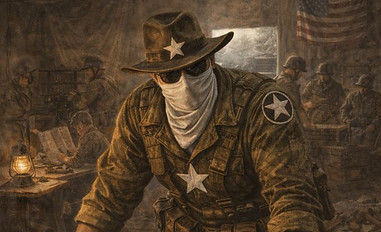
The Allied Fighters were the first great international super-team of the modern age, formed in the desperate early days of World War II when ordinary military power alone was no longer enough to confront the growing darkness spreading across the globe.
The team was officially founded on December 10, 1941, just days after the United States was drawn fully into the war. What began as a hurried but purposeful alliance of extraordinary patriots, mystery men, scientists, soldiers, and national champions soon became one of the most important covert strike forces of the Allied war effort. Their mission was clear: go where conventional forces could not, stop threats too dangerous or unusual for normal armies, and break the hidden power structures supporting the Axis war machine.
Unlike a standard military unit, the Allied Fighters were assembled from many nations, backgrounds, and traditions. Some were uniformed defenders already known in their homelands. Others were secret operatives, resistance figures, mystical guardians, experimental heroes, or masked symbols of defiance. Together, they represented the best hopes of the free world at a time when civilization itself seemed at risk of collapse.
At their center stood Captain Invader, the team’s field leader and living symbol of unbreakable Allied resolve. A powerful battlefield hero and relentless commander, Captain Invader became the public face of the team’s courage and the private anchor that held its diverse membership together. Under his leadership, the Allied Fighters evolved from an emergency wartime coalition into a disciplined international force capable of fighting on multiple fronts at once.
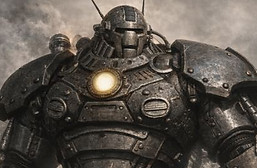
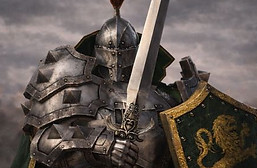
During the war, the Allied Fighters’ membership fluctuated, but the original wartime roster numbered roughly two dozen heroes. Drawn from North America, Europe, Asia, the Middle East, Latin America, and beyond, they gave the team a truly global identity long before such cooperation became common. Their operations ranged from direct battlefield support and sabotage to espionage, resistance coordination, artifact recovery, prison camp liberation, scientific intervention, and counter-superhuman operations.
Their greatest and most consistent enemy was Axis Force, a shadowy concentration of enemy champions, warlords, scientists, occultists, assassins, and superhuman loyalists aligned with the Axis powers. Where the Allied Fighters stood for courage, sacrifice, and liberation, Axis Force embodied domination, cruelty, fear, and weaponized ideology. The conflict between the two groups was fought not only in open combat, but also through sabotage, secret research projects, intelligence wars, and desperate races to control powerful technologies and ancient forces.
Among Axis Force’s most dangerous leaders was the infamous Baron Berlin, the Allied Fighters’ most enduring wartime nemesis and the personal arch-enemy of Captain Invader. Brilliant, ruthless, and fanatically devoted to victory through terror and power, Baron Berlin became a recurring architect of enemy operations against the team. Time and again, his schemes forced the Allied Fighters into some of their deadliest and most defining missions.
From 1941 to 1945, the Allied Fighters served in every major theater touched by the hidden war behind the public one. They struck enemy strongholds in occupied Europe, disrupted covert cells in Asia and the Pacific, fought to protect civilians and resistance networks, and opposed secret weapons programs that could have changed the outcome of the entire conflict. They were often deployed where official governments could not publicly acknowledge them, and many of their greatest victories remained known only to intelligence circles, military leadership, and the people they saved.
Yet the Allied Fighters were never only a team of powerhouses. They were a union of very different personalities and specialties: front-line combatants, aerial champions, infiltrators, mystics, patriots, marksmen, inventors, and operatives. Some became legends in public wartime morale. Others remained classified, their names spoken only in whispers among soldiers, agents, and resistance fighters. What united them was not similarity, but shared purpose.
The team’s wartime history was also shaped by sacrifice. Not every mission ended in triumph without cost. The Allied Fighters endured injuries, loss, moral strain, and the burden of fighting an enemy willing to use any weapon—scientific, supernatural, or psychological—to win. The war tested each member differently, but it forged the team into something larger than a collection of heroes. It made them a brotherhood and sisterhood of resistance against tyranny.
The presence of extraordinary figures such as Chrononaut, whose relationship to time itself added mystery and strategic significance to certain wartime events, hinted that the Allied Fighters’ role in history was even greater than most of the world realized. Heroes such as Philippines Fighter and others from occupied or embattled nations reminded the team that this war was not an abstract geopolitical struggle, but a human fight for survival, dignity, and freedom in cities, villages, jungles, mountains, and seas across the world.
By the final phase of the war, the Allied Fighters had become one of the most respected and feared superhuman organizations on Earth. To Allied nations, they were symbols of hope. To the Axis, they were a constant threat—unpredictable, relentless, and impossible to fully destroy. Their victories did not win the war alone, but they prevented countless disasters, shattered many hidden enemy offensives, and preserved critical paths to Allied victory.
The wartime service of the Allied Fighters came to its formal close on September 2, 1945, with the end of World War II. But their legacy did not end there. The team had proven that heroes from different nations, cultures, and traditions could stand together in common cause against global evil. That lesson would shape every future generation of Allied Fighters.
In the decades that followed, their wartime deeds became the foundation of a larger legend. Some members disappeared into history. Some returned to civilian life. Some entered intelligence, defense, or quiet postwar service. And some, like Captain Invader, carried the memory of that war forward into later eras, ensuring that the ideals the team fought for would not be forgotten.
The WWII Allied Fighters were more than a super-team. They were a living answer to the darkest question of their age: when tyranny rises across the world, who will stand against it?
They did.
And history was changed because of it.

BASE


Although the Allied Fighters of World War II operated across nearly every major theater of the war—often using Allied bases, military camps, field headquarters, and temporary accommodations provided by supporting forces—Captain Invader insisted the team have a base of its own.
Deep beneath Boston, hidden from both enemy intelligence and the public eye, he established a secret underground headquarters that served as the team’s private command-and-control center. For its time, it rivaled the operational hubs of many senior military commands around the world.
Despite its strategic importance, the base itself was far from luxurious. It was built for function, secrecy, and survival—not comfort.
Communications equipment, mission planning areas, repair spaces, medical support, supply storage, and simple berthing made up the core of the facility. Yet amid all of its hard, utilitarian features, one place stood apart: the Bar.
The Bar was the closest thing the team had to a refuge. There, the Allied Fighters could sit, talk openly after missions, and briefly escape the relentless pressures of war. In an era when loose talk in public establishments could easily be overheard by enemy sympathizers or spies, the privacy of their own base gave them a rare sense of security. It was one of the few places where they could let down their guard, share a drink, and reclaim a little of their humanity—away from reporters, military formality, and the carefully maintained public image of wartime heroes.
Over time, this hidden Boston headquarters became more than a wartime shelter; it became part of the Allied Fighters’ legacy. In later years, the same location would be reclaimed and reused by future generations of Allied Fighters teams—updated for newer eras, expanded with improved technology, and granted a few more comforts, but always rooted in the same history, purpose, and spirit that first defined it during World War II.