HISTORY
The Seaguardians are GUARD’s premier maritime super-team, operating in support of SEAGUARD, the sea, ocean, and major-waterway mission command within GUARD Global Operations Command. Administratively, the team falls under Guardian Corps Command as one of GUARD’s specialized Guardian field teams, but operationally the Seaguardians answer to the global maritime crisis needs of SEAGUARD.
​
They are not simply a naval strike team. They are submariners, rescue specialists, engineers, weapons experts, metahumans, former soldiers, reformed criminals, survivors, and oddballs who have become one of the most dangerous and trusted maritime peacekeeping forces on Earth.
​
The roots of the Seaguardians reach back to COMSUBRON Alpha, a classified United States Navy Special Operations Submarine Squadron created to develop and operate unique high-technology submarines. In its earliest years, COMSUBRON Alpha was still building its fleet and testing revolutionary naval systems when the Soltan Star Empire invaded Earth in January 2000.
​
The Soltan Invasion devastated the world’s naval and submarine forces. One of the few experimental submarines to survive the early stages of the war was the USS Nautilus (SSQ-1), a refurbished submarine equipped with a quantum-energy power plant that allowed it to teleport more than 200 miles at a time. Commanded by then-Commander Craig Wolfe, the Nautilus became one of Earth’s strangest and most valuable naval assets during the invasion.
​
By the end of the Soltan Invasion in August 2000, Wolfe had been promoted to Captain and had participated in several critical operations against Soltan command ships, including actions that helped drive invading forces away from the Hawaiian Islands. But victory came at a terrible cost. The world’s submarine forces were effectively destroyed, and for nearly a decade Earth’s undersea military reach remained crippled.
​
Ten years after the Soltan Invasion, new maritime threats began to rise. The undersea nation of the Atlantic Kingdom became more aggressive. Rogue powers such as Oceania and the United Canadian Empire complicated global sea lanes. Violent encounters in the Pacific with god-like beings eventually tied into the emergence of the Kaha Koa. Surface combat ships were repeatedly damaged or destroyed, and the world’s exhausted post-invasion infrastructure could not keep replacing them at the pace the threats demanded.
​
That was when former U.S. Navy Captain Jonathan Argough presented GUARD with a bold proposal: SEAGUARD.
​
SEAGUARD would become GUARD’s dedicated maritime operations command, responsible for peacekeeping, rescue, defense, and crisis response across the seas, oceans, and major waterways of the world. Like AEROGUARD, TERRAGUARD, ASTROGUARD, and other GUARD mission commands, SEAGUARD would require not only ships and submarines, but a specialized Guardian team capable of facing threats conventional naval forces could not.
​
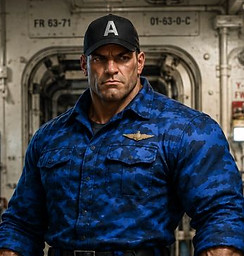
With approval from the World Court, GUARD leadership, and the United States Navy, SEAGUARD was established. Jonathan Argough became Commodore Argonaut, commander of SEAGUARD. Captain Craig Wolfe, transformed by his own later encounters with Atlantic Kingdom science and paranormal maritime threats, became Captain Seawolf, leader of the Seaguardians.
​
The Seaguardians’ primary base of operations became the GSS Paragon City, descended from the experimental technology legacy of the USS Nautilus and COMSUBRON Alpha. Built around advanced teleportation, deep-ocean endurance, command-and-control systems, and SEAGUARD mission support, the Paragon City allowed the team to respond rapidly to maritime crises anywhere on Earth.
​
From the beginning, the Seaguardians were not built like a normal military unit. Captain Seawolf understood submarines, secrecy, and command pressure, but he also understood broken people. The team he formed was a collection of specialists who had often been damaged by the sea, war, crime, technology, or tragedy — and then given a second chance to serve something larger than themselves.
​
Torpedo Man, Chief Dale Dryer, brought old-school submarine grit and armored naval firepower to the team. A decorated U.S. Navy torpedoman and weapons expert, Dryer became a legend after launching himself from a torpedo tube during an Arctic attack on the USS Annapolis and single-handedly helping turn back an Atlantic Kingdom boarding force. His Torpedoman armor made him SEAGUARD’s living missile: a high-speed armored assault asset equally dangerous in the air, underwater, or aboard a hostile vessel.
​
Sonar Man, Brad Brehm, brought acoustic genius, sonar mastery, and one of the team’s most painful redemption stories. Once a brilliant young engineer whose life was destroyed by the Maritime Marauders and Scorpius, Brad was blamed for deaths he did not truly cause before Captain Seawolf gave him a path out of despair. As Sonar Man, he rebuilt his technology with discipline and became one of the Seaguardians’ key detection, communications, and sonic-response specialists.
​
Hurt Locker, Tom Faris, brought chaos, toughness, and relentless improvised survival. A former Navy cook turned kit-bashing weapons savant, Hurt Locker became one of the team’s strangest and most dangerous close-quarters problem solvers. His friendship with Torpedo Man became one of the team’s most unlikely bonds, built on weapons, movies, technical absurdity, and the kind of loyalty that does not need many words.
​
Fire Control brought shipboard fire-control skill, tactical discipline, and precision combat technology. His armor and weapons systems made him a vital part of the team’s response to boardings, Ningren attacks, and close-range maritime combat.
​
Amperage added electrical power, engineering instinct, and shipboard combat capability, especially in high-risk environments where power systems, sabotage, and emergency response overlapped.
​
A-Ganger represented the hard-working engine-room soul of the team: practical, strong, and connected to the working-class backbone of ships, machinery, and survival under pressure.
​
Chief Sargasso brought deep-sea endurance and hard-earned resilience from the darkest reaches of oceanic horror. His experience with pressure, wreckage, and undersea terror gave the team a living reminder that not every ocean threat comes from a fleet or nation.
​
Nucleonics added radiation resilience, nuclear-systems experience, and one of the team’s most dangerous survival profiles. His story tied the Seaguardians to reactor disasters, impossible rescues, and the high cost of operating near technologies that can kill entire populations if mishandled.
​
Sandlance brought a very different kind of redemption. Once manipulated by Dawid and the 40 Thieves into becoming a living sand-formed thief and weapon, Casildo Shukr chose justice over the criminal father figure who had stolen his life. His service with the Seaguardians gave the team a coastal infiltration, rescue, and combat specialist whose powers work in unique harmony with maritime environments.
​
Together, these individuals transformed the Seaguardians from a concept into a family.
​
That family is not always orderly. It is loud, damaged, sarcastic, stubborn, and occasionally dysfunctional. The Seaguardians argue, joke, improvise, and clash like people who spend too much time sealed inside a submarine together. But when the alarms sound, they function with frightening precision. Every member is trained in shipboard operations, damage control, emergency repair, underwater survival, and basic submarine systems. Even the most unusual members are expected to know how the ship works, how to keep it alive, and how to protect the crew.
​
The Seaguardians have since fought the Atlantic Kingdom, Maritime Marauders, Ningren forces, undersea warlords, pirate fleets, rogue nations, sea monsters, technothreats, deep-ocean anomalies, and post-Soltan maritime chaos. They have rescued civilians from sinking vessels, stopped nuclear and biological disasters at sea, defended trade routes, boarded hostile ships, recovered stolen technology, and protected coastal nations from threats no conventional navy could safely handle.
​
They are often described by global observers as one of the greatest peacekeeping sea forces in Earth’s history. The United Nations and World Security Council have repeatedly praised their effectiveness, but praise has never been what drives them.
​
The Seaguardians exist because the oceans are too vast, too dangerous, and too important to leave undefended.
​
They are the shield beneath the waves, the strike team on the storm deck, the rescue crew in the flooded compartment, and the last voice over the radio when everything else has failed. They are SEAGUARD’s living edge — the people sent when diplomacy, patrol fleets, and ordinary rescue forces are no longer enough.
​
From COMSUBRON Alpha to the GSS Paragon City, from the ashes of the Soltan Invasion to the modern age of GUARD, the Seaguardians continue to patrol the world’s waters with courage, discipline, and stubborn loyalty.
​
They are not just a team.
​
They are a crew.
​
GSS Paragon CIty
Seagurdians' Quantum-Drive Submarine


Additional MDUVerse Info
The Seaguardians group was created by Don 'Major Deej" Finger on 8 October 2013 and is based on a previous group he created called "COMSUPSUBRON 1" (also called COMSUBRON Alpha), on 31 May 2007. The characters that make-up the team were all created by Don Finger as well, however, their creation dates varied, most of which were created between 2007 and 2013.


